Strategic Scale: Insights from Starbucks
Jordan Shields, Partner
When Starbucks recently unveiled its new ordering algorithm, designed to streamline operations, reduce wait times, and better match staffing to real-time demand, it didn’t just improve customer experience. It offered an unexpected lesson for healthcare leaders: the power of scale.
According to Starbucks, the algorithm is already saving 10 to 15 seconds per drink order by optimizing how baristas prepare beverages. At some peak hours, order times have been reduced by two minutes. That might sound minor, but across millions of daily transactions, those seconds and minutes add up to thousands of saved labor hours, improved throughput, and a smoother customer experience. This seemingly small gain is only possible because of Starbucks’ ability to collect and analyze massive volumes of data across its global footprint.
For hospitals contemplating whether to remain independent or join a larger health system, this is a powerful analogy. Like Starbucks, healthcare providers are dealing with tight margins, fluctuating demand and labor shortages. Scale, when harnessed effectively, can unlock efficiencies that transform operations, increase quality and improve care.
The Power of Aggregated Data
Starbucks’ algorithm works because it draws from data collected at scale. Standalone coffee shops and regional chains don’t have the volume of data on customer behavior, ordering patterns, staffing fluctuations, and even equipment usage needed to feed the type of model Starbucks created.
In healthcare, similar benefits can be achieved at scale by aggregating patient and operational data across a system of hospitals. A large health system can detect trends and predict needs that a standalone hospital cannot. For example, predictive analytics for emergency department volumes, inpatient census, or sepsis alerts are all significantly more accurate when trained on system-wide vs. site-specific data. This leads to faster, better-informed decisions and better patient outcomes. Although EPIC has begun to aggregate some of this data, standalone providers with access still lack organization specific insights.
Operational Efficiency and Workforce Optimization
Just as Starbucks can now predict peak hours and pre-position staff accordingly, health systems can do the same with nurses, techs, and support personnel. For hospitals facing persistent staffing shortages, a continuing pain point for rural hospitals in particular, this kind of predictive scheduling is invaluable. It can reduce costly overtime, minimize burnout, and improve patient throughput. In fact, Starbucks’ algorithm doesn’t just tell baristas what to make and when, it coordinates tasks across the team. Similar workflow optimization tools in hospitals can help allocate tasks more efficiently among care teams, improving throughput and reducing length of stay.
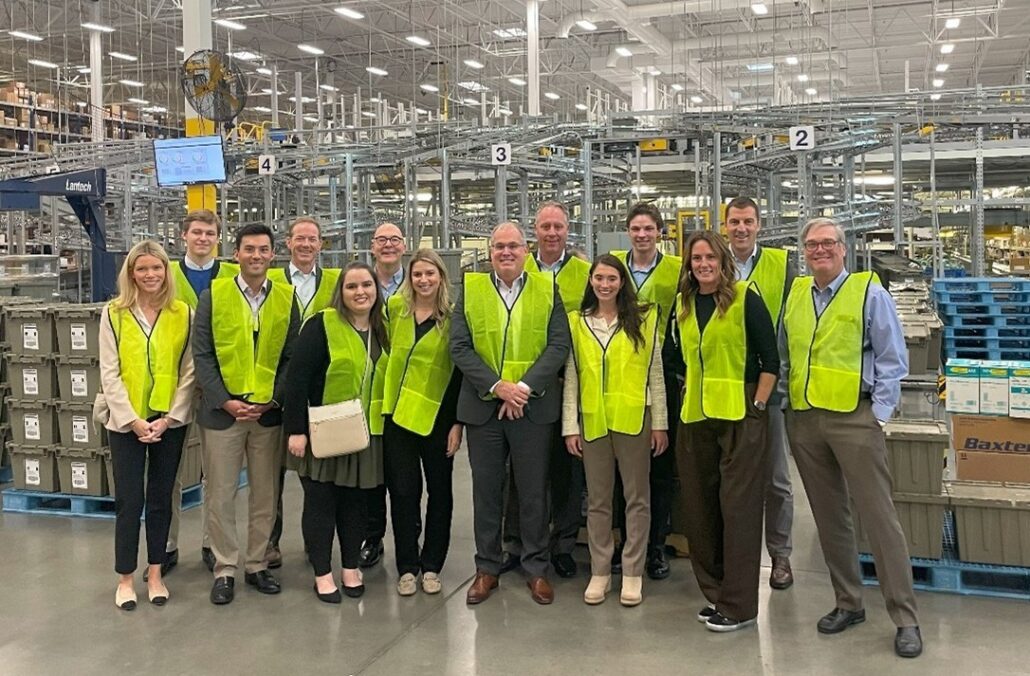
As Juniper saw last fall in our visit to Intermountain’s Supply Chain Center, centralized procurement and inventory management are hallmarks of well-run, scaled systems that can reduce waste and save costs. Much like Starbucks ensures each location has exactly what it needs to make customized beverages throughout the day, health systems too can benefit from data and scale driven inventory management protocols to better manage medical supplies, pharmaceuticals, imaging capacity and other.
Scalable Infrastructure and Innovation
Starbucks can afford to invest in sophisticated technology because the returns are realized across a global footprint and not just from a single location. Similarly, large health systems can justify investments in advanced medical records, clinical decision support tools, telehealth platforms, cybersecurity and other, where these investments are out of reach for standalone organizations.
This type of infrastructure investment also accelerates innovation. A new clinical workflow, digital health tool, or staffing model can be piloted at one site, then scaled system-wide if it proves effective. Standalone hospitals and smaller systems must resort to off-the-shelf options marked up by vendors and even these are typically only available years after the large systems have rolled them out across their sites.
Conclusion: Building for the Future
Starbucks didn’t develop its algorithm overnight. It took years of investment and data refinement. The same is true in healthcare. Joining a larger system isn’t just about solving today’s problems, it’s about preparing for tomorrow’s. Scale helps hospitals adapt more quickly to emerging technologies, regulatory shifts, and public health crises.
The Starbucks ordering algorithm may be about coffee, but its lessons extend far beyond lattes and macchiatos. It shows how scale enables smarter operations, better staffing, and more consistent experiences. For hospitals navigating complexity and change, the message is clear: size, used wisely, offers a strategic advantage.